Vulnerability Management & Risk Reduction Program
Framework Alignment: SOC 2 & ISO/IEC 27001
Objective: Reduce organizational risk by preventing vulnerable assets from entering production and ensuring timely, well‑governed remediation across infrastructure, databases, and endpoints
Overview
Established vulnerability management as a preventive, risk‑based control integrated into both production readiness and ongoing operations. The program aligned technical vulnerability scanning, remediation scheduling, and patch validation to SOC 2 and ISO/IEC 27001 expectations, ensuring vulnerabilities were identified early, prioritized appropriately, and remediated in a controlled, auditable manner.
How I Approached Vulnerability Risk Management
Preventive Vulnerability Controls & Production Readiness
- Executed enterprise vulnerability scans using Qualys and Nessus
- Performed mandatory vulnerability scans on all new server builds prior to production deployment
- Ensured systems met baseline security requirements before promotion to production, supporting preventive controls under SOC 2 CC7 and ISO operational security principles
Continuous Risk Monitoring & Leadership Visibility (SOC 2 CC4 | ISO Clause 9)
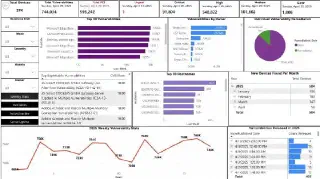
- Designed and delivered a Power BI Vulnerability Management Dashboard
- Provided visibility into open vulnerabilities, remediation progress, and vulnerability burndown trends
- Enabled management review and continuous monitoring of security risk posture
Clear Ownership & Accurate Data Mapping (SOC 2 CC3 | ISO Clause 6)
- Parsed vulnerability scan outputs using Python to accurately map vulnerabilities to specific devices and responsible owners
- Delivered owner‑specific remediation views to reduce noise and increase accountability
- Improved data integrity for both remediation tracking and audit evidence
Risk‑Based Prioritization & Zero‑Day Response (SOC 2 CC5 | ISO Risk Treatment)
- Prioritized vulnerabilities based on severity, exploitability, and active threat intelligence, including zero‑day exploitation
- Focused remediation efforts on vulnerabilities posing the highest risk to confidentiality, integrity, and availability
- Ensured remediation decisions aligned with documented risk tolerance and audit expectations
Cross‑Team Remediation Scheduling & Governance (SOC 2 CC7 | ISO Clause 8)
- Collaborated closely with server, database, and endpoint teams to establish structured vulnerability remediation schedules
- Coordinated remediation timelines based on system criticality, exposure, and operational impact
- Facilitated recurring remediation discussions to track progress and remove blockers
Patch Testing & Controlled Deployment
- Worked directly in SCCM and Patch My PC to validate and test patches prior to production rollout
- Ensured patches were tested for stability and compatibility before deployment
- Supported controlled, auditable patch management processes aligned with ISO patch management and SOC 2 system operations controls
Audit & GRC Integration
- Ensured vulnerability remediation activities, approvals, and outcomes were documented and retained as audit evidence
- Demonstrated continuous monitoring, risk treatment, and control effectiveness during audits
- Integrated vulnerability management metrics into broader GRC and audit readiness reporting
Impact & Results
- Prevented insecure servers from entering production environments
- Reduced time‑to‑remediate for high‑risk and zero‑day vulnerabilities
- Improved coordination and accountability across infrastructure, database, and endpoint teams
- Strengthened patch governance through testing and controlled deployment
- Provided clear, defensible evidence of vulnerability management controls during SOC 2 and ISO‑aligned audits
